In today’s competitive business environment, reaching the right audience is just as important as having a great product or service. Businesses have more marketing channels than ever before, from Google Ads and social media campaigns to television commercials, newspapers, radio, and billboards. However, choosing the right marketing approach can be challenging, especially when deciding between performance marketing and traditional marketing.
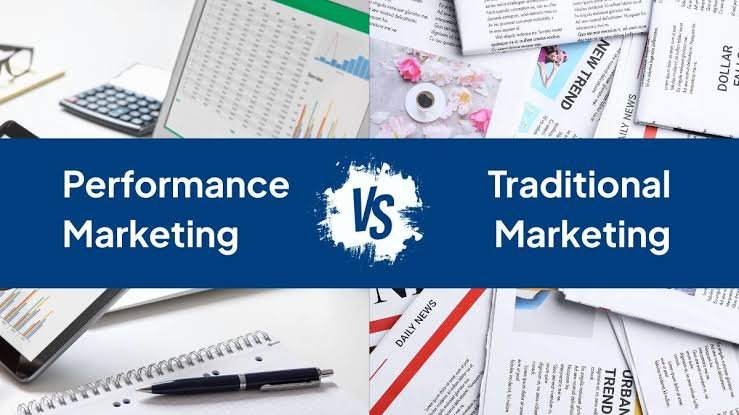
The debate around performance marketing vs traditional marketing is becoming increasingly relevant as businesses look for ways to improve their marketing results while controlling costs. Traditional marketing has been a trusted approach for decades, helping brands build awareness through offline channels. Performance marketing, on the other hand, uses digital platforms, data, and measurable actions to help businesses track and optimize their campaigns.
So, which one is better for your business? The answer depends on your target audience, business goals, budget, industry, and the way you measure success. Understanding the differences between these two approaches can help you build a marketing strategy that delivers stronger and more sustainable results.
What Is Performance Marketing?
Performance marketing is a results-driven form of digital marketing where campaigns are measured based on specific actions or outcomes. Instead of simply paying to reach an audience, businesses can track actions such as clicks, leads, website visits, app installations, purchases, or conversions.
Common performance marketing channels include Google Ads, Meta Ads, social media advertising, affiliate marketing, search engine marketing, display advertising, and other digital campaigns.
For example, an e-commerce company may run a Google Ads campaign for a specific product. The business can track how many people clicked the advertisement, how many visited the website, how many added the product to their cart, and how many finally purchased it. This data allows marketers to understand whether the campaign is generating a positive return.
One of the biggest advantages of performance marketing is measurability. Businesses can monitor metrics such as click-through rate (CTR), conversion rate, cost per click (CPC), cost per acquisition (CPA), customer acquisition cost (CAC), return on ad spend (ROAS), and return on investment (ROI). Marketers can then use these insights to improve campaign performance.
What Is Traditional Marketing?
Traditional marketing refers to marketing methods that existed before the rise of digital platforms. It primarily focuses on offline communication and mass media.
Some common examples include television advertisements, radio commercials, newspapers, magazines, billboards, brochures, flyers, direct mail, and outdoor advertising.
For example, a local restaurant may place a billboard near a busy road to attract people living or working in the area. Similarly, a large consumer brand may use television advertising to reach millions of viewers and increase brand awareness.
Traditional marketing can be particularly effective when a business wants to create broad awareness and establish a strong physical presence. However, measuring the exact impact of an offline campaign can sometimes be more difficult than measuring a digital campaign.
Performance Marketing vs Traditional Marketing: Key Differences
The major difference between performance marketing and traditional marketing is how campaigns are targeted, measured, optimized, and distributed.
Traditional marketing generally focuses on reaching a large audience through offline media. Performance marketing focuses on reaching specific audiences and measuring their actions.
For example, a newspaper advertisement may reach thousands of readers, but it may be difficult to determine exactly how many people saw the advertisement and then purchased the product. In performance marketing, marketers can use tracking tools to determine how many people clicked an advertisement, visited the website, submitted a form, or completed a purchase.
This does not mean traditional marketing is ineffective. Instead, each approach has different strengths and works better in different situations.
1. Targeting and Audience Reach
Performance marketing provides detailed audience targeting options. Businesses can target consumers based on factors such as location, age, interests, online behavior, search queries, previous interactions, and purchasing behavior.
For example, a fitness brand can target people who have shown an interest in fitness, wellness, gym memberships, or sports products.
Traditional marketing usually offers broader targeting. A billboard, newspaper advertisement, or television commercial can reach a large audience, but the business may have less control over exactly who sees the message.
For businesses with a clearly defined target audience, performance marketing can therefore provide greater targeting flexibility.
2. Measurement and Analytics
One of the strongest advantages of performance marketing is its ability to provide measurable data.
Marketers can track impressions, clicks, conversions, leads, purchases, engagement, and revenue. This information makes it easier to determine whether a campaign is working.
Traditional marketing can also be measured, but attribution is often more difficult. A business may know that sales increased after launching a television or billboard campaign, but identifying exactly how many customers came from that advertisement can be challenging.
For businesses that rely heavily on data-driven decision-making, performance marketing can offer a significant advantage.
3. Budget and Cost Control
Performance marketing allows businesses to control their advertising budgets more precisely. Campaigns can often be started with relatively small budgets and adjusted based on results.
For example, a small business can start a social media advertising campaign with a limited daily budget. If the campaign generates quality leads at an acceptable cost, the business can gradually increase its spending.
Traditional advertising can sometimes require a larger upfront investment, particularly for television, print, radio, or outdoor advertising. This can make it more difficult for small businesses and startups to experiment with multiple campaigns.
However, traditional marketing can still deliver strong value when it is used strategically, especially for brands with larger budgets and mass-market products.
4. Speed and Flexibility
Digital performance marketing campaigns can usually be launched, monitored, and modified quickly. Marketers can change advertisements, audiences, budgets, keywords, or landing pages based on campaign performance.
Suppose an advertisement is receiving clicks but very few conversions. A marketer can test a different headline, creative, offer, audience, or landing page.
Traditional marketing campaigns are generally less flexible once they are published. Changing a printed advertisement, billboard, or television commercial may require additional time and expense.
This makes performance marketing particularly useful for businesses that want to continuously test and improve their marketing campaigns.
5. Brand Awareness and Trust
Traditional marketing continues to have an important role in brand building. Television, print, radio, and outdoor advertising can help businesses establish credibility and become recognizable to a broad audience.
Performance marketing is also capable of building brand awareness, particularly through social media, video advertising, content marketing, and search campaigns. However, performance marketing often focuses heavily on measurable actions such as leads and sales.
A strong marketing strategy does not necessarily have to choose between awareness and performance. Businesses can combine both approaches to build awareness while also generating measurable results.
Advantages of Performance Marketing
Performance marketing has become increasingly popular because it allows businesses to connect marketing spending with measurable outcomes.
One major advantage is measurability. Businesses can understand where their money is being spent and what results it is generating.
Another advantage is precise targeting. Digital platforms allow marketers to reach specific audience segments instead of communicating with everyone.
Performance marketing also provides real-time optimization. If a campaign is not performing well, marketers can make changes instead of waiting until the campaign ends.
It can also be highly scalable. A successful campaign can potentially be expanded by increasing the budget, testing new audiences, introducing new creatives, or expanding into additional platforms.
These benefits make performance marketing especially attractive to e-commerce businesses, startups, SaaS companies, service providers, and businesses that depend heavily on online leads or sales.
Advantages of Traditional Marketing
Despite the growth of digital marketing, traditional marketing is far from irrelevant.
Traditional advertising can provide strong visibility, especially when a brand wants to reach a broad local or national audience. Television and outdoor advertising can create repeated exposure and help consumers remember a brand.
Traditional marketing can also be useful for businesses targeting audiences that may not spend significant amounts of time online.
Another advantage is physical presence. Brochures, packaging, event materials, newspapers, and outdoor advertisements can create tangible brand experiences that digital advertisements cannot always replicate.
For certain industries, combining traditional marketing with digital campaigns can therefore create a stronger overall customer journey.
Which Is Better for Small Businesses?
For many small businesses, performance marketing can be a practical starting point because it allows them to work with smaller budgets and track results.
A local salon, for example, could use Google Ads to target people searching for salons in its city. It could also run Instagram or Facebook campaigns promoting a limited-time offer and track inquiries, bookings, and conversions.
Instead of spending a large amount on a broad offline campaign, the business can test different digital strategies and invest more money in the campaigns that generate results.
However, traditional marketing can still be useful for local businesses. Flyers, local newspapers, outdoor signage, and community events can complement digital campaigns and increase local visibility.
Which Is Better for Large Businesses?
Large businesses often have the resources to use both performance and traditional marketing.
A consumer brand launching a new product may use television advertising and billboards to generate mass awareness while simultaneously using Google, Instagram, YouTube, and other digital channels to target specific customer groups.
The digital campaigns can also help the company understand customer behavior and generate measurable conversions.
This integrated approach allows businesses to combine the reach of traditional marketing with the measurement and targeting capabilities of performance marketing.
Performance Marketing and Traditional Marketing Can Work Together
The biggest mistake businesses can make is assuming that they must completely choose one approach over the other.
In reality, performance marketing and traditional marketing can complement each other.
For example, a new restaurant could use outdoor advertising to create awareness in a local area while using Google Search Ads to reach people actively searching for restaurants nearby. It could also use Instagram advertising to promote special offers and track online reservations.
In this situation, traditional marketing creates visibility while performance marketing captures measurable customer actions.
The right marketing mix depends on the business's objectives, customer journey, budget, and industry.
How to Choose the Right Marketing Strategy for Your Business
Before deciding between performance marketing and traditional marketing, businesses should first identify their primary objective.
If the goal is to generate immediate leads, sales, website traffic, or measurable conversions, performance marketing may be the better choice.
If the goal is broad brand awareness, mass visibility, or reaching audiences through offline channels, traditional marketing may be more appropriate.
Businesses should also consider their target audience. If their customers spend significant time searching online, using social media, or shopping through digital platforms, performance marketing can provide valuable opportunities.
Budget is another important consideration. Businesses with limited budgets may benefit from starting with measurable digital campaigns, testing their approach, and scaling the strategies that perform well.
Most importantly, businesses should avoid selecting a marketing channel simply because it is popular. The best strategy is the one that reaches the right audience, communicates the right message, supports business objectives, and produces sustainable results.
The Future of Marketing: Data + Creativity
The future of marketing is unlikely to belong exclusively to either performance marketing or traditional marketing. Instead, successful brands will increasingly combine data-driven decision-making with creative brand building.
Performance marketing gives businesses valuable information about what customers respond to. Traditional marketing can help create awareness, emotional connections, and memorable brand experiences.
Modern marketers need both analytical and creative skills. They must understand campaign metrics while also knowing how to develop compelling messages, strong visuals, engaging content, and consistent brand positioning.
As digital platforms continue to evolve, businesses will also need to focus on customer experience, personalization, first-party data, content quality, and long-term brand value rather than simply chasing clicks.
Final Verdict: Performance Marketing vs Traditional Marketing
So, performance marketing vs traditional marketing — which is better for your business?
There is no universal answer.
Performance marketing is often a strong choice for businesses that want precise targeting, measurable results, flexible budgets, and real-time campaign optimization. Traditional marketing remains valuable for businesses looking to build broad awareness, reach offline audiences, and create strong brand recognition.
For many businesses, the most effective approach is a combination of both.
A smart marketing strategy starts with clear business objectives, identifies the target audience, selects the right channels, measures performance, and continuously improves based on data. Instead of asking which marketing method is universally better, businesses should ask which combination of channels will help them reach their customers and achieve their goals most effectively.
At Devobyte, we believe effective digital marketing is not simply about running advertisements. It is about understanding the audience, creating the right strategy, using data intelligently, and continuously optimizing campaigns for meaningful business growth.
The right marketing strategy can help a business move from simply being visible to becoming memorable, trusted, and profitable.
For more such blogs please visit Devobyte Innovators