Introduction
Artificial intelligence is transforming how enterprises operate, automate tasks, and make business decisions. While traditional AI tools and large language models (LLMs) can generate text, answer questions, summarize documents, and assist with content creation, businesses are increasingly looking for AI systems that can do more than respond to prompts. This is where Agentic AI in enterprise environments is becoming important. Agentic AI enables intelligent systems to plan tasks, use tools, make decisions within defined boundaries, and execute multi-step workflows with limited human intervention. For enterprises seeking greater efficiency, scalability, and operational agility, autonomous AI agents represent a significant evolution in business automation.
What Is Agentic AI in Enterprise?
Agentic AI refers to AI systems designed to pursue specific goals by planning actions, interacting with software tools, processing information, and adapting their next steps based on the results they receive. Unlike a conventional chatbot that primarily responds to individual prompts, an AI agent can work through a sequence of tasks to achieve a defined outcome. In an enterprise environment, these agents may support customer service, sales operations, IT management, finance, human resources, supply chain coordination, and data analysis. For example, instead of simply generating a report about declining sales, an AI agent could retrieve sales data, identify underperforming products, compare regional performance, prepare a summary, and notify the appropriate team for review.
The key difference is that Agentic AI focuses on completing workflows rather than generating isolated responses. It combines the reasoning capabilities of large language models with access to enterprise data, external tools, business rules, and workflow orchestration systems. This combination allows organizations to move from basic AI assistance toward more outcome-oriented automation.
How Autonomous AI Agents Go Beyond Simple LLM Prompts
Large language models are powerful tools for understanding language, generating content, and interpreting information. However, a standard LLM interaction typically follows a request-and-response pattern. A user provides a prompt, the model generates an answer, and the user decides what to do next. Although this approach is useful for individual tasks, it can become inefficient when a business process requires several connected actions across multiple applications.
Agentic AI extends this model by introducing planning, tool use, memory or contextual state, and feedback-driven execution. An autonomous workflow agent can break a larger objective into smaller steps, determine which tools are required, execute permitted actions, evaluate the results, and adjust its approach when something goes wrong. For example, an employee onboarding agent could collect approved employee information, initiate account provisioning, coordinate equipment requests, schedule orientation sessions, and track outstanding tasks. Rather than requiring an employee to prompt an LLM separately for every action, the agent coordinates the workflow according to established business rules.
However, autonomy does not mean unrestricted decision-making. Enterprise agents should operate within clearly defined permissions, policies, approval requirements, and escalation procedures. High-impact decisions may still require human authorization, especially when they involve financial commitments, confidential information, legal obligations, or sensitive employee and customer data.
Key Components of Enterprise Agentic AI Systems
A successful enterprise Agentic AI system requires more than a powerful language model. One essential component is a planning and reasoning layer that interprets business objectives and determines the steps needed to achieve them. This layer helps the agent organize complex requests into manageable tasks and select appropriate actions.
Another important component is tool integration. Enterprise agents often need to interact with customer relationship management platforms, enterprise resource planning systems, databases, email applications, project management software, and internal APIs. These integrations allow agents to retrieve information and execute authorized operations instead of merely describing what should happen.
Context management is equally important. Agents need access to relevant information, including the current workflow state, previous actions, applicable business policies, and the results of earlier steps. Reliable context helps prevent repeated actions and enables the system to continue a process without losing track of its objective.
Finally, workflow orchestration, monitoring, and governance help ensure that agents operate consistently. These components manage task dependencies, enforce permissions, record actions, handle failures, and determine when human intervention is necessary. Together, they transform an AI model into a practical enterprise automation system.
Real-World Applications of Agentic AI in Enterprises
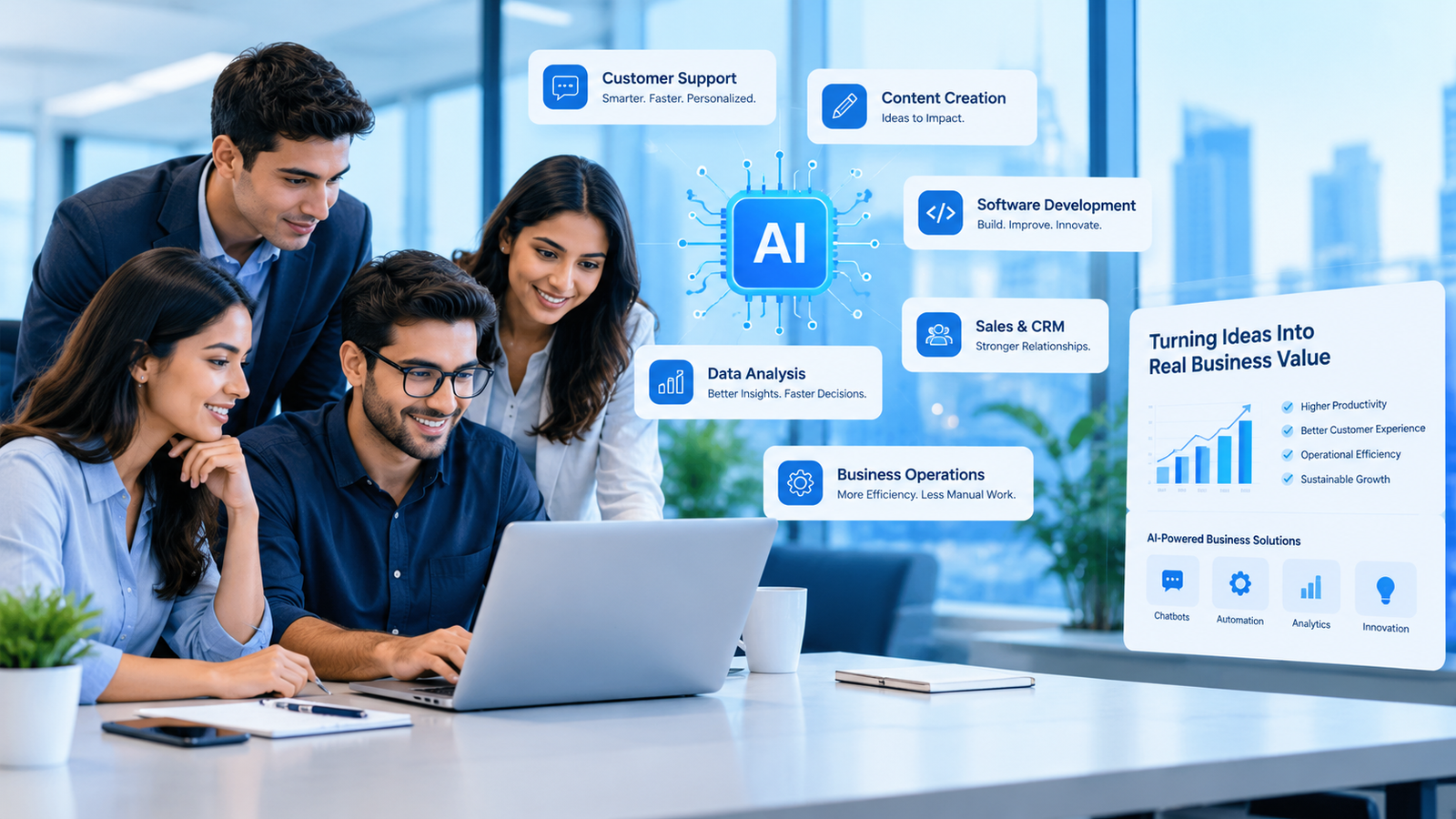
One of the most promising applications of Agentic AI is customer relationship management. AI agents can analyze customer interactions, identify potential sales opportunities, update CRM records, prepare meeting briefs, and recommend relevant follow-up actions. In more advanced workflows, an agent could monitor sales activity, identify deals that have stalled, gather supporting information, and draft personalized outreach for a sales representative to approve. This reduces repetitive administrative work and gives sales teams more time to focus on customer relationships.
In customer support, autonomous agents can classify incoming requests, retrieve relevant information from approved knowledge bases, troubleshoot common issues, and create support tickets. When a request involves an unusual situation or requires a policy exception, the agent can transfer the case to a human representative with the relevant context attached.
Finance teams can use Agentic AI to assist with invoice processing, transaction matching, expense verification, and financial reporting. For example, an agent may compare invoice details against purchase orders, flag discrepancies, request missing documentation, and prepare an exception report. Sensitive transactions and final payment approvals can remain under human control.
IT departments can deploy workflow agents to investigate routine system alerts, gather diagnostic information, categorize incidents, and recommend remediation steps. With appropriate permissions, agents may also execute predefined recovery procedures. In human resources, they can coordinate onboarding activities, answer employee questions using approved policies, and track routine administrative requests.
Across these applications, the greatest value often comes from coordinating multiple connected tasks rather than automating a single isolated action.
Agentic AI vs. Traditional Automation and LLM-Based Tools
Traditional automation typically follows predefined rules and structured workflows. It is highly effective for repetitive tasks with predictable inputs, but it may struggle when information is incomplete or circumstances change. LLM-based tools provide greater flexibility in interpreting unstructured information, but a basic prompt-based interaction generally depends on a person to initiate the next step.
Agentic AI combines elements of both approaches. It uses language models to interpret context and support planning while relying on software integrations, deterministic business rules, and workflow controls to execute tasks. This can make it suitable for processes that involve multiple systems, changing information, and conditional decisions.
For example, a traditional automation workflow may send a notification whenever a deal remains inactive for seven days. An LLM assistant may explain why the deal appears at risk when prompted. An agentic workflow could identify the inactive deal, review available interaction history, check the next scheduled activity, draft a suitable follow-up, and route the recommendation to the sales representative. The exact level of autonomy depends on the agent's permissions, system integrations, and business requirements.
Agentic AI is not automatically better for every task. Simple, repetitive processes may be faster, cheaper, and easier to maintain with conventional automation. Enterprises should select the approach that best matches the complexity, risk, and expected value of each workflow.
Benefits of Agentic AI for Enterprise Operations
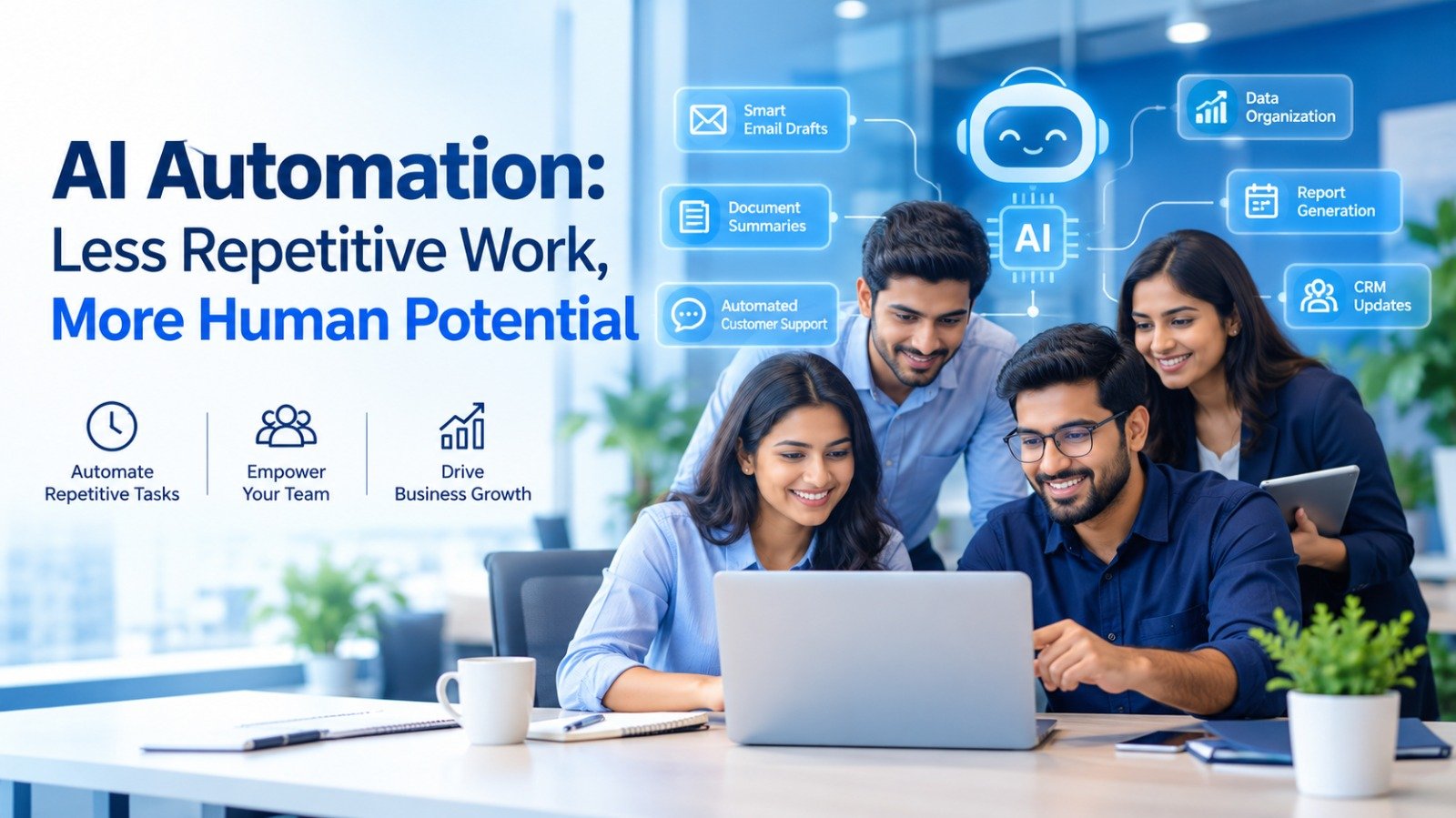
One of the main benefits of Agentic AI is increased operational efficiency. By coordinating several steps within a workflow, AI agents can reduce repetitive data entry, manual handoffs, and time spent switching between applications. This allows employees to focus on work that requires judgment, creativity, negotiation, and relationship-building.
Agentic AI can also improve responsiveness. Agents may monitor events and process requests continuously, subject to system availability and operational controls. This can help businesses respond more quickly to customer inquiries, internal requests, and workflow exceptions.
Another advantage is improved consistency. When agents operate under approved instructions, standardized procedures, and clear validation rules, they can help teams follow established processes more reliably. They may also improve visibility by recording actions, identifying bottlenecks, and providing summaries of workflow progress.
Scalability is another important consideration. Enterprises can expand successful agent-based workflows across departments or business units without increasing manual effort at the same rate. However, achieving these benefits requires careful implementation, reliable data, ongoing monitoring, and a clear understanding of where human oversight remains essential.
Challenges of Implementing Agentic AI in Enterprise Environments
Despite its potential, Agentic AI introduces several challenges that organizations must address before deploying autonomous workflows at scale. One major concern is data quality. Agents depend on accurate, current, and relevant information to make useful decisions. Inconsistent CRM records, disconnected databases, and outdated documentation can lead to incorrect recommendations or failed actions.
Security is another critical issue. Because enterprise agents may access multiple applications and sensitive information, organizations must establish strict identity controls, least-privilege permissions, and secure integration practices. Agents should only access the data and perform the actions necessary for their assigned responsibilities.
Reliability also requires attention. Language models can produce incorrect information, misunderstand instructions, or choose unsuitable actions. Multi-step workflows can amplify these errors if the system does not validate results after each important action. Organizations should use structured outputs, deterministic checks, bounded retries, transaction controls, and human escalation wherever appropriate.
Cost and performance must also be evaluated. Complex agents may require multiple model calls, extensive tool interactions, and additional monitoring infrastructure. Enterprises should measure the total cost of completing a workflow, including exception handling and human review, rather than judging success solely by the apparent intelligence of the model.
Best Practices for Deploying Autonomous AI Agents
Enterprises should begin with a clearly defined business problem rather than attempting to introduce autonomous agents across every department at once. Suitable starting points include repetitive, measurable workflows with well-understood rules, accessible data, and manageable consequences if an action fails.
The next step is to map the entire workflow, including its inputs, dependencies, exceptions, approval stages, and expected outcomes. This helps teams determine which steps require an AI agent, which are better handled by conventional automation, and which must remain under human control.
Organizations should then integrate agents with approved enterprise systems through secure APIs and controlled tool access. Every action should have a defined permission boundary, while important decisions should include appropriate validation and approval mechanisms. Logging and audit trails should make it possible to understand what the agent did, which information it used, and why a workflow was escalated or stopped.
Finally, businesses should evaluate performance using practical metrics such as task completion rate, processing time, error frequency, cost per completed workflow, employee productivity, and customer satisfaction. Pilot projects should be tested against realistic scenarios before wider deployment. Continuous evaluation helps organizations improve reliability while ensuring that autonomy remains aligned with business objectives.
The Future of Agentic AI in Enterprise Workflows
The future of enterprise AI is likely to involve a combination of specialized agents, conventional automation, and human decision-making. Instead of relying on one general-purpose model for every task, organizations may deploy different agents for research, customer support, finance operations, sales coordination, and IT service management. These agents can work within shared governance frameworks and coordinate through standardized interfaces.
As enterprise software becomes more compatible with AI-driven tools, agents may be able to manage increasingly complex workflows across multiple business applications. However, wider adoption will depend on reliable integrations, transparent decision processes, strong security, and clear accountability. Businesses will need to distinguish between workflows that can be safely automated and those that require human judgment.
The most effective enterprise AI strategies will not focus on autonomy alone. They will combine intelligent planning with dependable execution, measurable outcomes, and meaningful human oversight. This balanced approach can help organizations capture the benefits of Agentic AI without introducing unnecessary operational risk.
Conclusion
Agentic AI in enterprise environments represents an important shift from prompt-based assistance to goal-oriented workflow execution. While traditional LLMs are useful for generating content and answering questions, autonomous AI agents can plan multi-step tasks, interact with business applications, evaluate results, and coordinate actions within defined boundaries. These capabilities create opportunities to improve customer service, streamline operations, strengthen sales processes, and reduce repetitive administrative work.
For enterprises, successful adoption depends on more than selecting an advanced AI model. It requires clean data, secure integrations, effective workflow design, measurable performance standards, and appropriate human oversight. Organizations that approach Agentic AI strategically can build more adaptive and efficient workflows while maintaining the reliability and accountability that enterprise operations demand.
As businesses continue to explore autonomous AI systems, Agentic AI and enterprise workflow automation are likely to become increasingly important parts of digital transformation strategies. The goal is not simply to make AI generate better answers, but to help organizations complete valuable work more efficiently, accurately, and responsibly.
To read more such articles kindly visit : Devobyte