Introduction
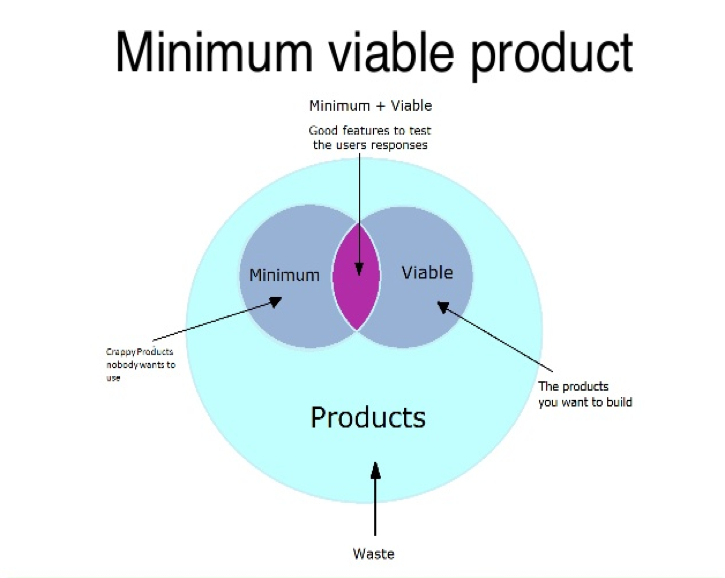
Building a Minimum Viable Product (MVP) is an essential step for startups and businesses looking to validate their ideas, attract early users, and enter the market quickly. However, developing an MVP that can scale efficiently requires more than simply creating a functional product. The architectural decisions made during the initial development phase can significantly influence future performance, flexibility, and growth.
A well-designed MVP architecture balances simplicity, development speed, cost efficiency, and scalability. Instead of building an overly complex system from the beginning, businesses should focus on creating a strong technical foundation that supports future expansion. Understanding the right architectural strategies for building a highly scalable MVP helps organizations avoid unnecessary technical debt while preparing their products for long-term success.
Why Scalability Matters in MVP Development
An MVP is designed to test assumptions and deliver essential functionality to early adopters. While its initial user base may be small, successful products can experience rapid growth in traffic, transactions, and data processing requirements.
Without a scalable architecture, increasing demand can lead to slow performance, system failures, and expensive redevelopment. Businesses may find themselves spending valuable resources rebuilding their applications instead of improving their products.
Scalability should therefore be considered during the planning and development stages. The objective is not to anticipate every possible future requirement but to establish an architecture that can evolve as the business grows.
Start with a Modular Architecture
One of the most effective architectural strategies for building a scalable MVP is adopting a modular design. A modular architecture divides an application into smaller, independent components, each responsible for a specific functionality.
For example, an MVP might contain separate modules for user authentication, payment processing, customer management, notifications, and reporting. These modules can be developed, tested, and maintained independently while working together as part of the overall application.
Modular architecture improves code organization, simplifies debugging, and makes future feature development more manageable. It also allows businesses to modify individual components without unnecessarily affecting the entire application.
For most early-stage products, a well-structured modular monolith can be an excellent starting point. It provides the simplicity of a single deployable application while maintaining clear boundaries between different business functions.
Choose the Right Technology Stack
Selecting the appropriate technology stack is another important consideration in MVP architecture. The technologies used should support rapid development, reliable performance, and long-term maintainability.
Businesses should evaluate programming languages, frameworks, databases, and infrastructure based on their product requirements rather than simply following popular technology trends.
A suitable technology stack should offer strong developer support, reliable documentation, security features, and the ability to integrate with other services. Choosing familiar and well-supported technologies can also reduce development time and simplify maintenance.
At Devobyte, technology decisions should be approached strategically, ensuring that the selected tools align with business objectives, product complexity, and expected growth.
Build for Cloud Scalability
Cloud infrastructure provides businesses with flexible resources that can expand or contract according to application demand. Instead of investing heavily in physical servers, startups can use cloud platforms to deploy applications and manage infrastructure more efficiently.
Cloud-based architecture enables businesses to scale computing resources, storage, and networking capabilities as their user base increases.
For an MVP, managed cloud services can significantly reduce operational complexity. Services such as managed databases, application hosting, storage, and monitoring allow development teams to focus on product functionality rather than infrastructure maintenance.
However, cloud scalability should not mean unnecessary spending. Businesses should begin with appropriately sized resources and introduce additional infrastructure capabilities when actual usage patterns justify them.
Design an Efficient Database Architecture
Database architecture plays a crucial role in application performance and scalability. Poor database design can create bottlenecks even when the application itself is well-developed.
During MVP development, businesses should select a database that matches their data structure and operational requirements. Relational databases are often suitable for applications involving structured information, transactions, and complex relationships. NoSQL databases may be useful when applications require flexible data models or particular forms of large-scale data processing.
Developers should also consider indexing, query optimization, data validation, and connection management from the beginning.
As the application grows, techniques such as caching, read replicas, and database partitioning may help improve performance. These optimizations should be introduced based on measurable requirements rather than assumptions about future traffic.
Prioritize API-First Development
An API-first approach can make an MVP more flexible and easier to integrate with external services. Application Programming Interfaces (APIs) allow different components and systems to communicate through clearly defined interfaces.
By establishing consistent API contracts, development teams can separate frontend and backend responsibilities while making future integrations more straightforward.
This approach becomes particularly valuable when businesses plan to introduce mobile applications, third-party integrations, or additional product interfaces.
A well-designed API architecture should include clear documentation, authentication, error handling, versioning, and appropriate rate limits. These practices help maintain compatibility and reduce integration challenges as the product evolves.
Use Microservices Only When Necessary
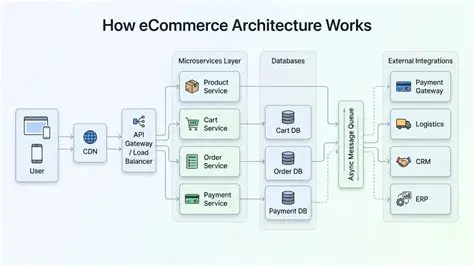
Microservices architecture is frequently associated with scalable software development. It allows applications to be divided into independently deployable services, each responsible for a particular business capability.
Although microservices can provide advantages in large and complex systems, they are not always the best choice for an MVP.
Managing multiple services introduces additional complexity, including network communication, deployment coordination, monitoring, security, and infrastructure costs.
For early-stage products, a modular monolithic architecture is often more practical. Businesses can establish clear service boundaries within the application and transition selected components into independent services when genuine scaling or organizational requirements emerge.
The most effective architecture is not necessarily the most sophisticated one. It is the architecture that supports current business needs while providing a realistic path toward future growth.
Implement Caching and Performance Optimization
Application performance directly affects user experience and customer retention. As an MVP attracts more users, frequently accessed information and repetitive database queries can increase system load.
Caching helps reduce unnecessary processing by temporarily storing frequently requested data. Depending on the application's requirements, developers may implement browser caching, application-level caching, or distributed caching solutions.
Performance optimization should also include efficient frontend rendering, optimized API responses, image compression, and minimizing unnecessary network requests.
Monitoring performance during early user testing can help identify bottlenecks before they become major problems.
Strengthen Security from the Beginning
Scalability should never come at the expense of security. As an application grows, it may handle increasing amounts of customer information, business data, and sensitive transactions.
Security should therefore be incorporated into the MVP architecture from the beginning.
Important practices include secure authentication, role-based access control, encrypted communication, input validation, secure API endpoints, and regular dependency updates.
Businesses should also consider data privacy requirements and establish appropriate backup and recovery procedures.
Building security into the initial architecture is generally more efficient than attempting to address major vulnerabilities after the product has already gained significant traction.
Introduce Automated Testing and CI/CD
Continuous Integration and Continuous Deployment (CI/CD) practices help development teams deliver updates more efficiently and reliably.
Automated testing can identify errors before new code reaches production, reducing the likelihood of performance issues and unexpected failures.
A practical MVP development workflow should include version control, automated testing, staging environments, and controlled deployment procedures.
As the application grows, CI/CD pipelines can help teams release new features faster while maintaining consistent quality.
These practices are especially valuable for businesses that expect to improve their MVP continuously based on customer feedback.
Monitor, Measure, and Scale Gradually
A scalable MVP should evolve according to real-world usage rather than theoretical expectations.
Businesses should monitor application performance, server utilization, database response times, error rates, user activity, and customer feedback.
These insights help development teams understand which parts of the application require optimization and which features are creating the most value.
Scaling decisions should be guided by measurable bottlenecks. For example, database optimization may be more valuable than adding additional servers if database queries are the primary source of performance issues.
A gradual, data-driven approach helps businesses control infrastructure costs while maintaining a reliable user experience.
Conclusion
Building a highly scalable MVP requires thoughtful architectural decisions that balance immediate business needs with future growth opportunities. By adopting modular architecture, selecting the right technology stack, leveraging cloud infrastructure, optimizing database performance, and implementing strong security practices, businesses can establish a reliable foundation for product development.
The key is to avoid unnecessary complexity while maintaining the flexibility to adapt. A scalable MVP should support rapid experimentation, continuous improvement, and efficient expansion as user demand increases.
Devobyte helps businesses transform innovative ideas into practical digital solutions through strategic software development and modern technology practices. With the right architectural foundation, organizations can build MVPs that deliver value today while remaining prepared for tomorrow's opportunities.
To read more such articles kindly visit : Devobyte