Imagine visiting a business website at midnight and instantly getting an answer to your question—without waiting for an employee to respond.
That is the power of AI chatbots.
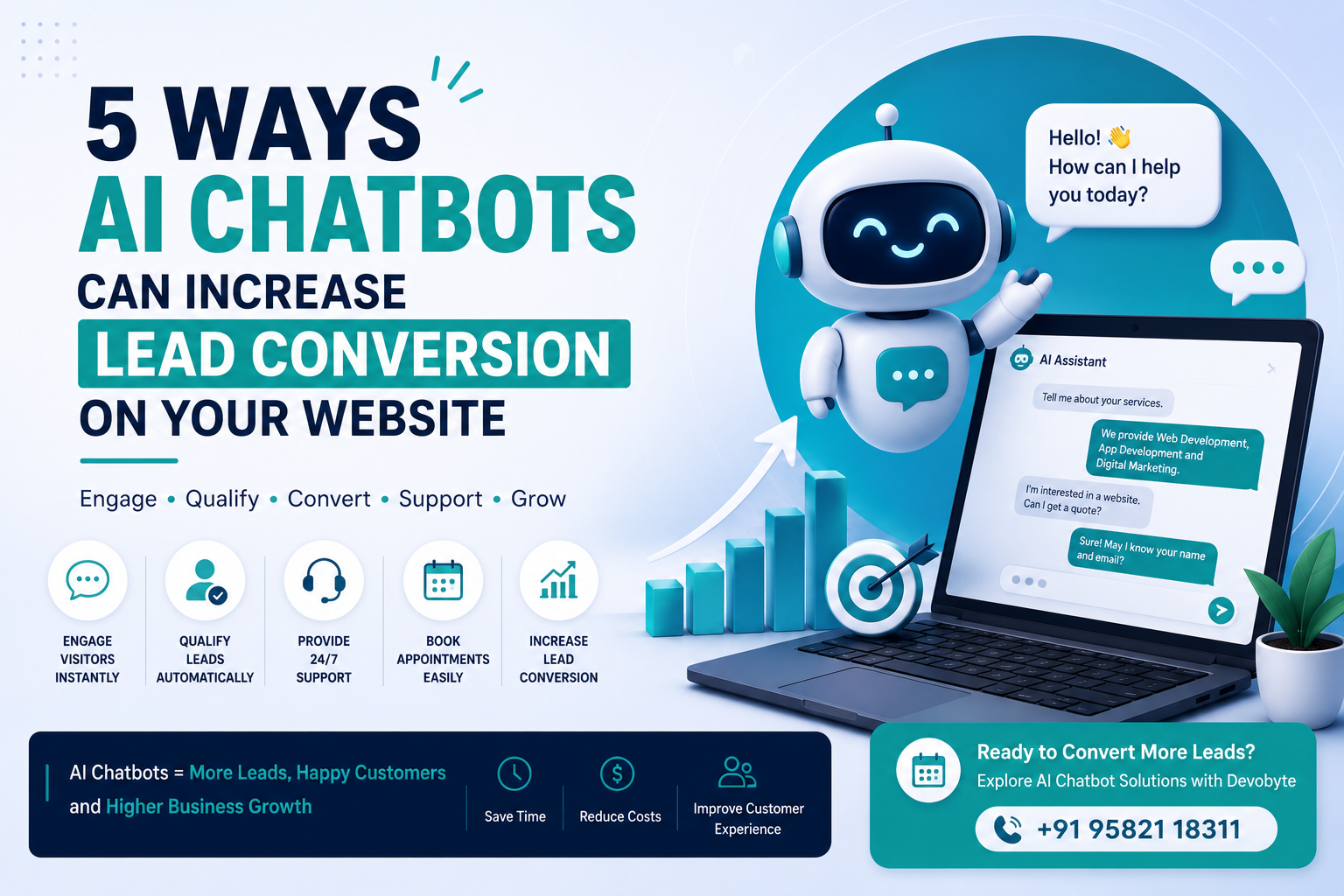
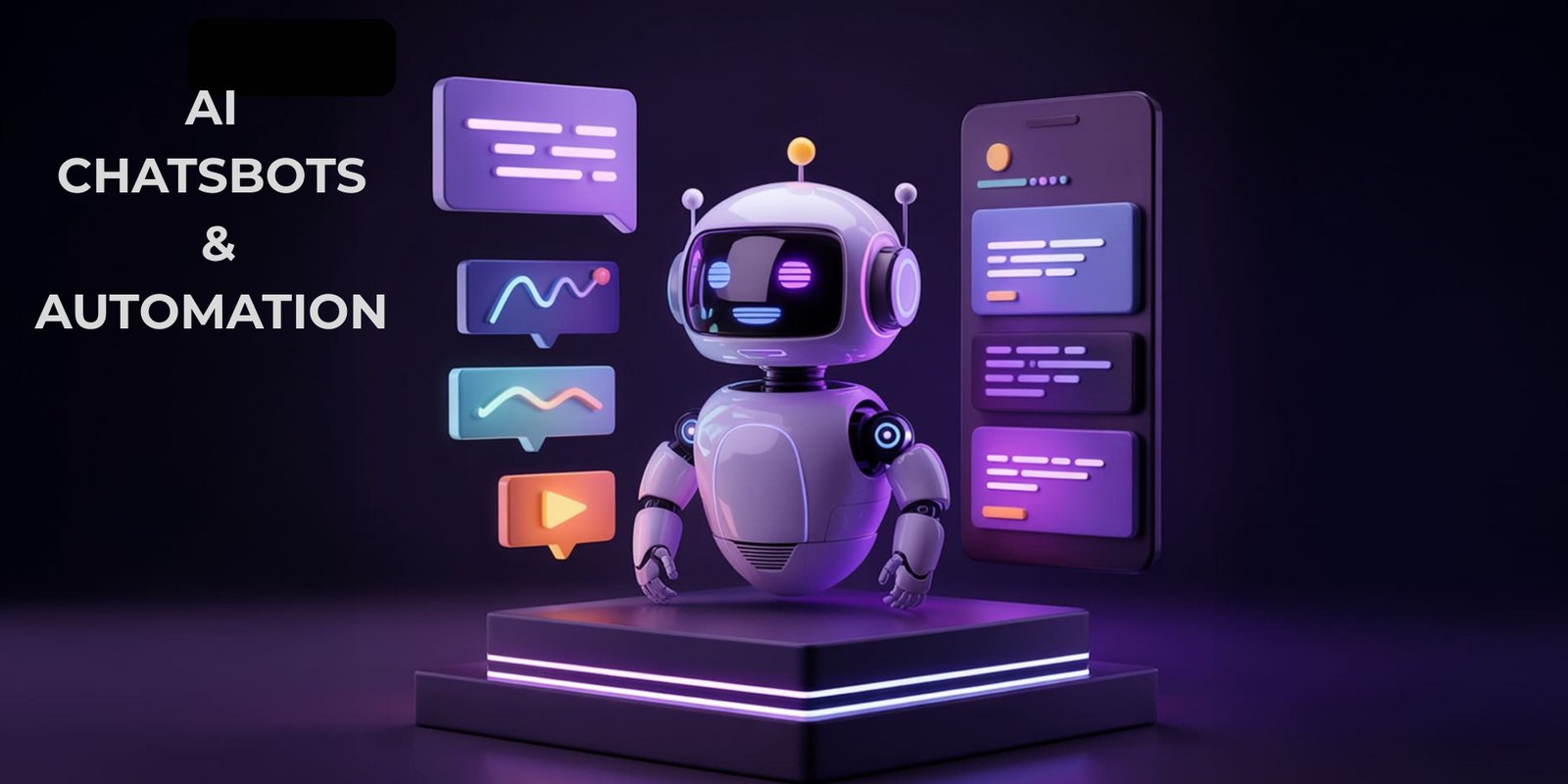
AI-powered chatbots are changing the way businesses communicate with customers, generate leads, provide support, and automate everyday conversations. Unlike traditional chatbots that rely primarily on predefined responses, modern AI chatbots can understand natural language, interpret customer intent, generate relevant responses, and handle increasingly complex conversations.
As businesses continue to adopt artificial intelligence, AI chatbots are becoming an important part of digital customer experience and business automation.
What Is an AI Chatbot?
An AI chatbot is a software application that uses artificial intelligence to communicate with users through text or, in some cases, voice.
AI chatbots use technologies such as natural language processing (NLP), machine learning, large language models (LLMs), and generative AI to understand questions and provide responses.
For example, when a customer asks:
“Where is my order?”
An AI chatbot can understand the request, retrieve relevant information from connected systems, and provide an appropriate response.
This makes AI chatbots more flexible than traditional rule-based chatbots.
How Do AI Chatbots Work?
Although the technology behind AI chatbots can be complex, the basic process is relatively simple.
1. User Sends a Message
The customer enters a question or request through a website, mobile application, messaging platform, or other communication channel.
2. AI Understands the Message
The chatbot analyzes the user's words and attempts to understand the intent behind the message.
For example:
Customer: “I want to know whether my order has been shipped.”
The chatbot identifies the intent as an order-status inquiry.
3. The System Processes Relevant Information
Depending on the chatbot's integration, it may retrieve information from a CRM, knowledge base, database, e-commerce platform, or other business system.
4. AI Generates a Response
The chatbot generates a response based on the available information and the conversation context.
5. Human Support When Required
If the request is too complex or requires human judgment, the chatbot can transfer the conversation to a customer-support representative.
This combination of AI + automation + human support can create a more efficient customer-service system.
Why Are AI Chatbots Important for Businesses?
Businesses receive hundreds or thousands of customer questions every day. Responding to every query manually can consume significant time and resources.
AI chatbots can help businesses manage routine conversations while allowing employees to focus on more complex tasks.
1. 24/7 Customer Support
Unlike human employees who work specific shifts, AI chatbots can operate around the clock.
Customers can ask questions at any time and receive immediate assistance.
This is especially useful for businesses serving customers across different time zones.
2. Instant Responses
Customers generally prefer quick answers.
Instead of waiting hours for an email response, users can interact with an AI chatbot and receive information almost instantly.
Faster communication can contribute to a better customer experience.
3. Lead Generation
AI chatbots can do more than answer customer questions.
They can also collect information from potential customers.
For example, a chatbot can ask:
- What service are you interested in?
- What is your business requirement?
- What is your estimated budget?
- How can we contact you?
The information can then be sent to the sales team for follow-up.
4. Reduced Support Workload
Many customer questions are repetitive.
Examples include:
- What are your business hours?
- What is your pricing?
- How can I track my order?
- What is your return policy?
- How can I reset my password?
AI chatbots can handle many routine questions automatically, reducing the workload on customer-support teams.
5. Personalized Conversations
Modern AI chatbots can use available customer information and conversation context to provide more relevant responses.
For example, an e-commerce chatbot can recommend products based on a customer's preferences, previous interactions, or stated requirements.
AI Chatbots vs Traditional Chatbots
Not all chatbots work in the same way.
| Feature | Traditional Chatbot | AI Chatbot |
|---|---|---|
| Responses | Predefined | AI-generated |
| Understanding | Rule-based | Natural-language understanding |
| Flexibility | Limited | More flexible |
| Conversation Context | Often limited | Can maintain context |
| Complex Questions | Difficult | Better suited |
| Personalization | Limited | More advanced |
| Learning/Adaptation | Usually limited | Can use AI models and data |
Traditional chatbots can still be useful for simple, predictable workflows. However, AI chatbots are particularly valuable when conversations require greater flexibility and language understanding.
Common Uses of AI Chatbots
AI chatbots can be implemented across different industries and business functions.
AI Chatbots for E-Commerce
Online stores can use chatbots to help customers:
- Find products
- Compare products
- Track orders
- Understand return policies
- Get product recommendations
- Receive basic post-purchase support
For example, a customer could ask:
“I need a laptop for graphic designing under my budget.”
An AI chatbot could ask follow-up questions and recommend relevant products.
AI Chatbots for Banking and Financial Services
Financial organizations can use conversational AI to provide information about:
- Account services
- Transactions
- Banking products
- Frequently asked questions
- Application processes
Because financial information can be sensitive, organizations need strong security, privacy controls, and appropriate human oversight.
AI Chatbots for Education
Educational institutions can use AI assistants to help students with:
- Course information
- Admission questions
- Application procedures
- Class schedules
- Campus information
- Frequently asked questions
AI assistants can provide students with quick access to commonly requested information.
AI Chatbots for Healthcare
Healthcare organizations can use conversational systems for administrative activities such as:
- Appointment scheduling
- Clinic information
- General FAQs
- Patient navigation
- Appointment reminders
However, healthcare chatbots should not be treated as a substitute for qualified medical professionals, particularly for diagnosis or emergency situations.
AI Chatbots for Marketing
Marketing teams can use AI chatbots to:
- Engage website visitors
- Capture leads
- Qualify prospects
- Answer product questions
- Recommend content
- Schedule consultations
This makes chatbots a useful component of modern digital marketing and lead-generation strategies.
Benefits of AI Chatbots for Small Businesses
AI chatbots are not only useful for large enterprises.
Small businesses can also use them to improve customer communication without requiring a large support team.
Some potential benefits include:
Lower manual workload: Routine questions can be handled automatically.
Better availability: Customers can interact with the business outside normal working hours.
Improved lead capture: Website visitors can be engaged immediately.
Faster communication: Customers don't always have to wait for an employee.
Scalable support: A chatbot can handle multiple conversations simultaneously.
For startups and growing businesses, these capabilities can help create a more efficient customer-support process.
Challenges of AI Chatbots
Despite their advantages, AI chatbots also have limitations.
Incorrect Information
AI systems can sometimes generate incorrect or misleading responses. Businesses should therefore use reliable knowledge sources and appropriate monitoring.
Privacy and Data Security
Chatbots may process customer information. Businesses must implement appropriate security measures and carefully manage sensitive data.
Lack of Human Empathy
AI can simulate natural conversation, but it does not replace genuine human empathy and judgment.
Sensitive complaints or emotionally complex situations should be escalated to trained employees.
Integration Challenges
For a chatbot to provide useful answers about orders, accounts, appointments, or customer records, it may need to connect with existing business systems.
Poor integration can limit the chatbot's usefulness.
How to Choose an AI Chatbot for Your Business
Before implementing an AI chatbot, businesses should consider several factors.
Define the Objective
First decide what the chatbot is expected to accomplish.
Is the goal:
- Customer support?
- Lead generation?
- Sales?
- Appointment booking?
- Product recommendations?
- Internal employee assistance?
A clearly defined objective makes it easier to select the right solution.
Consider Integration
The chatbot should work with the systems your business already uses, such as CRM platforms, websites, help desks, calendars, or databases.
Evaluate Security
Businesses should examine how customer data is collected, stored, processed, and protected.
Plan Human Handoff
A good chatbot should know when it cannot adequately solve a problem.
Providing an easy path to human support can improve the overall customer experience.
Measure Performance
Businesses can monitor metrics such as:
- Number of conversations
- Response time
- Customer satisfaction
- Lead conversion
- Resolution rate
- Human escalation rate
- Cost savings
These metrics help determine whether the chatbot is actually delivering business value.
The Future of AI Chatbots
The future of AI chatbots is moving toward more intelligent and context-aware AI assistants.
Instead of simply answering questions, AI assistants can increasingly help users complete tasks.
For example, a customer might say:
“Find a suitable product, compare the options, and help me place an order.”
An advanced AI system could potentially coordinate multiple steps rather than simply responding with information.
Businesses are also exploring AI agents that can interact with multiple software systems and perform tasks on behalf of users.
This means the evolution of chatbots may move from:
Question → Answer
to: Understand → Reason → Act → Follow Up
AI Chatbots and the Future of Customer Experience
Customer expectations are changing rapidly.
People increasingly expect businesses to provide fast, convenient, personalized digital experiences. AI chatbots can help organizations meet these expectations while reducing the pressure on human support teams.
However, the most successful chatbot strategies will not necessarily be those that remove humans from the process.
Instead, businesses can use AI for repetitive and information-heavy interactions while allowing employees to handle complex, sensitive, and high-value conversations.
Conclusion
AI chatbots are becoming an important technology for modern businesses. They can provide 24/7 assistance, respond instantly to customer questions, generate leads, automate repetitive conversations, and improve digital customer experiences.
From e-commerce and education to banking, marketing, and customer support, AI chatbots have applications across a wide range of industries.
For businesses considering chatbot adoption, the key is to focus on solving a real customer or operational problem rather than implementing AI simply because it is trending.
The future belongs to businesses that can combine artificial intelligence, automation, and human expertise to create faster, smarter, and more personalized customer experiences.
To Read more Such News visit Business Press